Indonesia's climate doesn't go easy on building materials. High humidity, intense UV exposure, heavy rainfall, and coastal salt air create conditions that accelerate corrosion, discoloration, and structural wear faster than most temperate climates. When choosing between aluminium and uPVC profiles for doors, windows, and facades, the tropical context matters enormously and the two materials respond to it very differently.
uPVC entered the Indonesian market as an affordable alternative, and on paper it looks appealing. It's lightweight, has decent thermal properties, and costs less upfront. The problem becomes apparent over time. uPVC is highly sensitive to UV radiation and prolonged heat exposure, which causes the material to yellow, become brittle, and eventually warp or crack. In Indonesia's coastal areas where salt air combines with heat and humidity, uPVC surfaces degrade noticeably within a few years. The initial savings tend to disappear once maintenance or replacement costs are factored in.
Aluminium handles tropical conditions fundamentally differently. When exposed to air and moisture, aluminium naturally forms a thin oxide layer on its surface that acts as a self-protective barrier against corrosion. It doesn't rust, doesn't absorb moisture, doesn't support mold growth, and maintains its structural integrity even in years of direct coastal exposure. This is why aluminium remains the dominant material in Indonesia's construction industry, particularly for mid to high-end residential and commercial projects where long-term performance matters more than initial price.
Structural strength is another area where aluminium holds a clear advantage. Wide sliding door systems, large frameless windows, and floor-to-ceiling glass applications all depend on profiles that can bear significant load without flexing or deflecting over time. uPVC profiles are inherently less rigid and typically require steel reinforcement inside the cavity to achieve comparable strength, which adds weight and complexity to the installation. Aluminium provides that rigidity as a native property of the material itself, which is why architects and contractors working on demanding projects consistently specify it over uPVC.
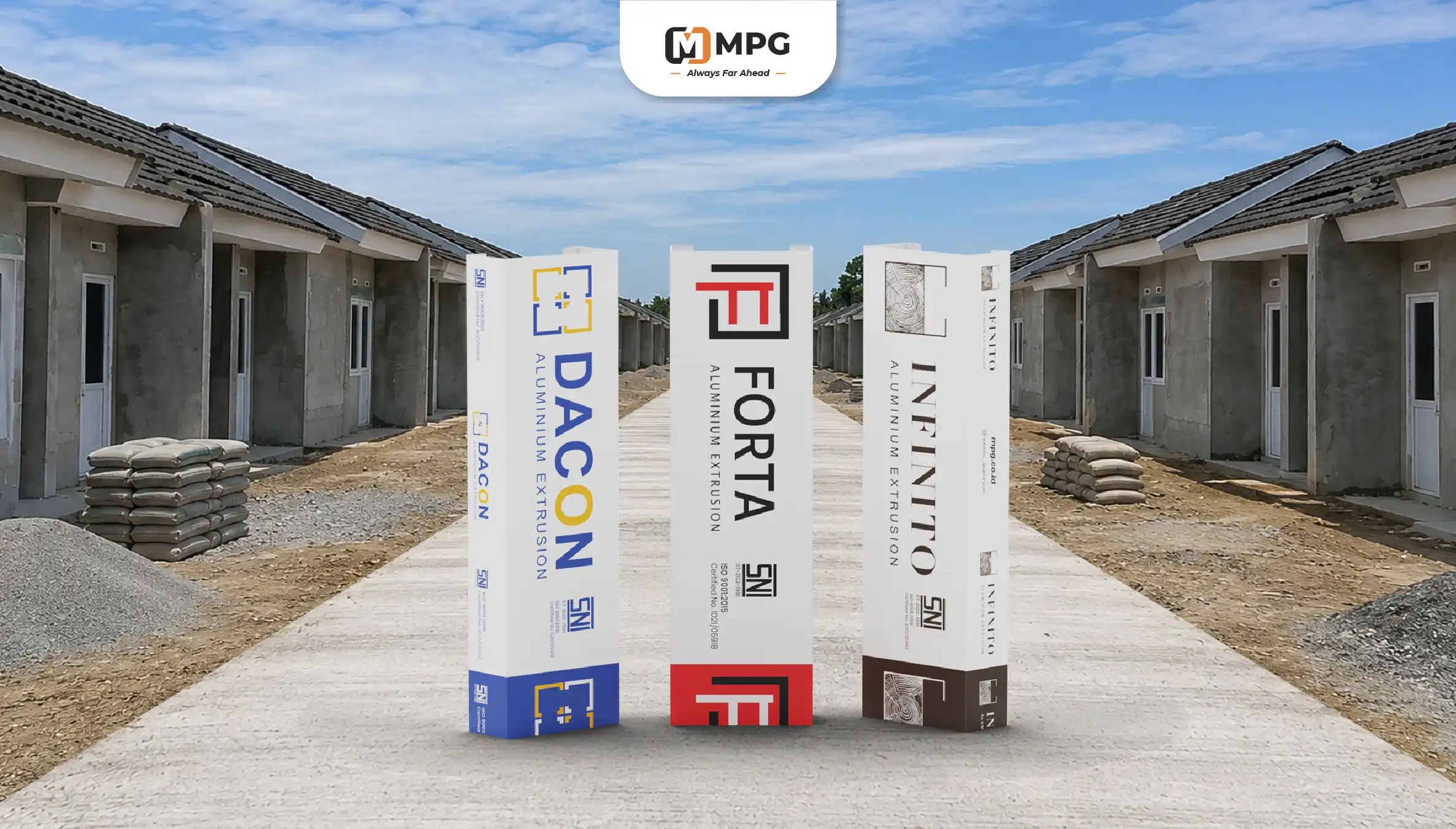
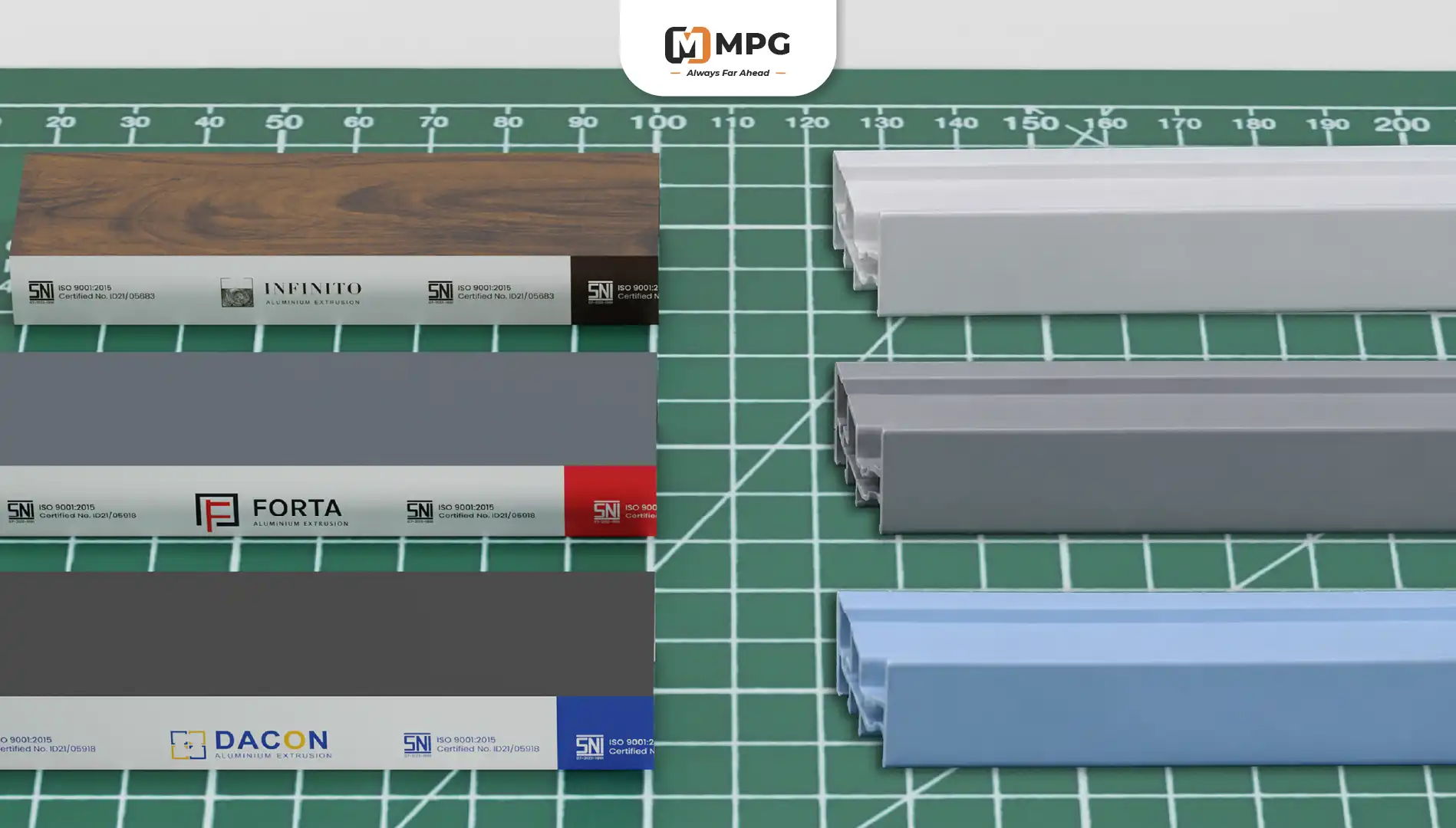
MPG addresses different ends of the aluminium market through three brands. FORTA is built for projects where structural performance and premium finish are non-negotiable, particularly villas, commercial buildings, and large-scale residential developments. DACON brings aluminium quality to a more economical price point, making it accessible for general residential renovation and construction without compromising on the core benefits of the material. INFINITO offers a wood grain aluminium surface, which is where the comparison with uPVC becomes particularly interesting. uPVC wood-effect profiles use printed foil laminates that peel, fade, and lose their texture over time in tropical heat. INFINITO's wood grain is applied at the profile level and maintains its appearance through decades of use without the degradation issues that affect uPVC equivalents.
Ultimately, both materials have a place in the market, but they serve different priorities. If the goal is the lowest possible upfront cost with a short planning horizon, uPVC is understandable. If the goal is a material that performs reliably over 20 to 30 years in Indonesia's climate, requires minimal maintenance, can be recycled at end of life, and retains its structural and aesthetic quality throughout, aluminium is the more logical choice. MPG's range across FORTA, DACON, and INFINITO means there's an aluminium solution for almost every project type and budget. Visit mpg.co.id or contact your nearest AX Aluminium distributor to find the right profile for your next project.